Packing for college is not only about fitting everything into boxes. For students living in residence halls, it also means thinking ahead about room space, shared areas, campus rules, travel plans, and the fact that most belongings may need to move again at the end of the academic year.
A smarter packing plan helps students bring what they will actually use, avoid bulky duplicates, and make summer transitions easier. The goal is not to create a perfect dorm setup, but to make each move between home, campus, storage, and summer plans easier to manage.
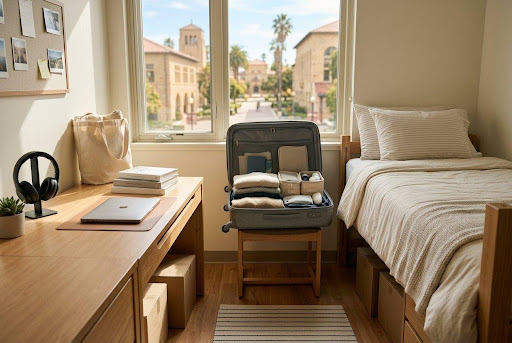
Start with Housing Details Before You Pack
Before buying supplies or filling suitcases, students should check the dates and instructions that apply to their housing assignment. Move-in, break, and move-out periods can affect flights, family travel, storage reservations, and summer housing plans.
Students should also think carefully about space. Residence hall rooms are usually furnished, many buildings include stairs or shared areas, and every extra box has to be carried, stored, and moved again later.
| What to Check | Why It Matters |
| Move-in window and building access | Prevents rushed unloading and travel conflicts |
| Furniture already provided | Helps avoid large items that will not fit |
| Break and summer dates | Shows what needs to travel, stay nearby, or be stored |
| Move-out expectations | Reduces forgotten items and possible fees |
| Shipping or storage timing | Makes end-of-year transitions easier |
Students who are flying, taking a train, or relying on family pickup should check baggage limits early. Waiting until the last day can turn a simple move into a stressful sorting session.
Bring What Supports Real Daily Life
The most useful dorm items are the ones that support real routines: sleeping, studying, laundry, weather, and basic organization. Since many rooms are already furnished, students generally do not need large furniture. It is also better to coordinate shared items with roommates after housing assignments are known.
A practical packing list should include bedding, towels, a laundry bag, laptop, chargers, school supplies, weather-appropriate clothing, personal documents, medication, and a small number of storage bins. Students may want to wait before buying extra organizers, lamps, kitchen items, or shared appliances until they see the room and talk with roommates.
Items often better left at home include bulky furniture, duplicate appliances, too many seasonal clothes, large decorations, and anything restricted by housing rules. Overpacking usually happens when students try to prepare for every possible situation.
Before packing something, ask:
- Will I use this every week?
- Is it allowed in my residence?
- Will I want to move it out again at the end of the year?
- Could I buy or borrow this later if I really need it?
If the answer is unclear, it may be better to leave the item at home.
Plan for Summer Before Finals Week
Summer move-out becomes easier when students think about it before the room is full. Some universities do not provide on-campus storage over summer break, so students should check housing guidance early and be ready to remove belongings completely if required.
That does not mean everything has to go home. It means students should decide early which items are worth keeping near campus, which can be shipped, and which should be donated or discarded.
| Item Type | Best Option | Practical Note |
| Bedding and winter clothing | Store near campus | Useful if returning in autumn |
| Books and small supplies | Ship or store | Heavy boxes can be expensive to fly with |
| Daily electronics | Take with you | Keep laptops and chargers accessible |
| Food, liquids, aerosols | Use up or discard | Not suitable for long-term storage |
| Extra decor or duplicates | Donate | Reduces packing before finals |
| Documents, IDs, medication | Carry personally | Should not be boxed, shipped, or stored |
Students can benefit from a luggage storage facility when temporary holding is needed between checkout, travel, internships, summer housing, or an off-campus lease. This works best for short gaps when a long-term storage unit would be unnecessary.
Label Boxes by Destination
Labeling is one of the easiest ways to reduce stress during both move-in and move-out. Instead of labeling boxes only by category, students should label them by destination and timing.
Useful labels include Use immediately, Dorm setup, Storage, Ship home, and Donate. The “use immediately” bag should stay with the student during travel. It should include toiletries, chargers, medication, documents, and a few outfits. It should not be packed deep in a car, shipped ahead, or placed in storage.
Leave Time for a Clean Move-Out
Move-out is smoother when students leave time for cleaning, key return, and a final room check. Most residence hall checkouts include removing personal belongings, returning furniture to its original location, taking out trash, and returning keys or access cards through the correct process.
Before leaving, students should check drawers and closets, unplug electronics, remove food, empty trash and recycling, and take photos of the clean room. It is also worth looking for campus donation or reuse programs near the end of the year, especially for clothing, bedding, small supplies, and items that are still usable.
Pack Less, Move Better
A good packing plan is not about bringing the most complete dorm setup. It is about making campus life comfortable without creating extra work later. Students move through several transitions each year, from arrival to breaks, internships, research, summer housing, and autumn return.
By checking housing details early, coordinating shared items, avoiding unnecessary furniture, planning storage before finals, and keeping essentials separate, students can make each transition more manageable.
